Medical Assistant Training in Kansas City, KS: What the Program Covers and Why It Works
Medical assistant training determines whether you walk into your first clinical job ready to contribute or spend months struggling to catch up. The right program covers the full scope of what medical offices need — phlebotomy, injections, EKGs, vitals, patient intake, scheduling, insurance, and EHR documentation — in a focused timeline with hands-on practice, not just lectures.
At Kansas City Medical Assistant School in Kansas City, training takes 18 weeks. Here’s what that includes and why it works.
What Medical Assistant Training Covers
According to O*NET (the U.S. Department of Labor’s occupational database), medical assistants perform 40+ distinct tasks across clinical procedures, administrative operations, and patient communication. A complete training program addresses all of them.
Clinical Skills
Vital signs and patient intake. Every patient encounter starts here. You’ll take blood pressure (manual and digital), pulse, temperature, respiratory rate, and oxygen saturation. You’ll also measure height, weight, BMI, review medication lists, document allergies, and record the chief complaint. In a busy practice, you might room 20–30 patients per day — speed and accuracy both matter.
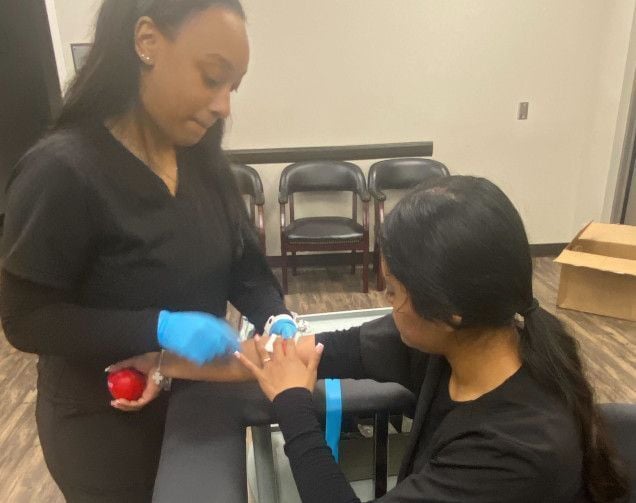
Phlebotomy. Drawing blood is one of the most in-demand medical assistant skills. Training covers venipuncture technique (finding the vein, inserting the needle, managing the tube order of draw), capillary puncture for fingerstick testing, specimen labeling and processing, and managing patients who are anxious or have difficult veins.
Injections. Medical assistants administer injections under provider orders. Training covers three types:
- Intramuscular (IM): vaccines, B12, testosterone, antibiotics
- Subcutaneous (SubQ): insulin, allergy shots, heparin
- Intradermal: TB skin tests (PPD/Mantoux)
Each type requires different needle gauge, insertion angle, and site selection.
EKG/ECG. Electrocardiography is standard in primary care and cardiology offices. Training covers 12-lead electrode placement, running the test, recognizing common artifacts, and transmitting results to the ordering provider. Placement precision directly affects result quality.
Point-of-care testing. Quick diagnostic tests performed in the office:
- Urinalysis (dipstick and microscopic)
- Blood glucose (fingerstick)
- Rapid strep, rapid flu, COVID
- Pregnancy tests
- Hemoglobin A1c
Additional clinical procedures. Wound care, ear irrigation, nebulizer treatments, specimen collection for cultures, and assisting providers during examinations and minor procedures.
Administrative Skills
O*NET classifies administrative competency as essential for medical assistants. Training covers:
- Electronic health records (EHR): Data entry, documentation, orders, and navigation in systems like Epic, eClinicalWorks, Athena, and NextGen
- Scheduling: Booking appointments, managing provider calendars, handling urgent same-day requests, coordinating referrals
- Insurance: Verifying patient coverage, processing prior authorizations, understanding basic CPT and ICD-10 codes
- Billing: Collecting copays, processing claims, answering patient billing questions
- HIPAA compliance: Patient privacy in every interaction — documentation, communication, and records handling
Certification Preparation
The CCMA (Certified Clinical Medical Assistant) credential from the National Healthcareer Association is the most widely recognized medical assistant certification. Quality training programs integrate CCMA exam content throughout the entire curriculum.
The CCMA exam tests: clinical procedures, administrative operations, medical terminology, anatomy and physiology, pharmacology basics, infection control, and professional conduct.
How Training at Kansas City Medical Assistant School Works
Duration: 18 weeks Schedule: Nights and weekends — designed for working adults Training location: Real medical offices Certification prep: CCMA exam content integrated throughout Externship: Supervised clinical experience in a local practice Credentials: Certificate of completion, BLS certification (AHA), CCMA exam eligibility
Why Real Medical Offices Matter
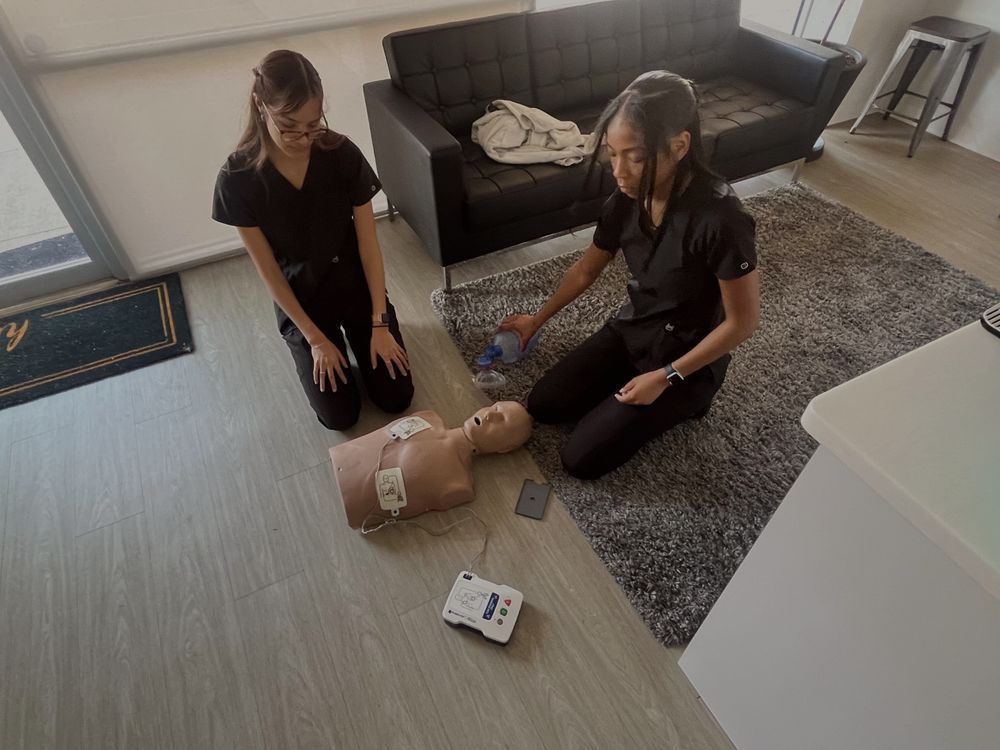
Kansas City Medical Assistant School holds classes inside working medical practices — not in traditional classroom buildings. This means you train on the same equipment, in the same environment, using the same workflows you’ll encounter on the job. Graduates who trained in real offices describe clinical procedures with specificity and confidence in interviews — because they’ve actually done them in a clinical setting.
Externship
The externship places you in a local medical office in Kansas City for supervised patient care. You’ll apply every skill with real patients under professional guidance. Many graduates receive job offers from their externship site. Even when that doesn’t happen, the experience and references are your strongest job search assets.
WIOA Funding May Be Available
Many programs at Kansas City Medical Assistant School are approved under the Workforce Innovation and Opportunity Act (WIOA). Eligible students may qualify for workforce-funded training through their local American Job Center. Check CareerOneStop.org to determine eligibility.
Salary and Career Outlook
Bureau of Labor Statistics data:
- Median salary: $42,000/year ($20/hour)
- Job growth: 14% through 2032 — nearly triple the national average
- Entry-level: $33,000–$38,000
- Certified/experienced: $42,000–$55,000+
- CCMA premium: $2,000–$6,000/year more than non-certified peers
O*NET classifies medical assisting as a “Bright Outlook” occupation — rapid growth, large numbers of openings, and strong demand nationwide.
State Requirements
Medical assistant certification and scope-of-practice rules vary by state. Some states require specific credentials for clinical tasks like injections or phlebotomy. Your state medical board is the authoritative source for current requirements.
The training at Kansas City Medical Assistant School covers the clinical competencies required across all states and prepares you for the nationally recognized CCMA exam.
Get Started
- See the full curriculum: Program details
- Review tuition and payment options: Tuition
- Talk to our team: Contact us
- Apply today: How to apply
You're only a few months from the medical assistant career you deserve.